
by: Jeruel Misa Pacatcatin, Administrative Officer III
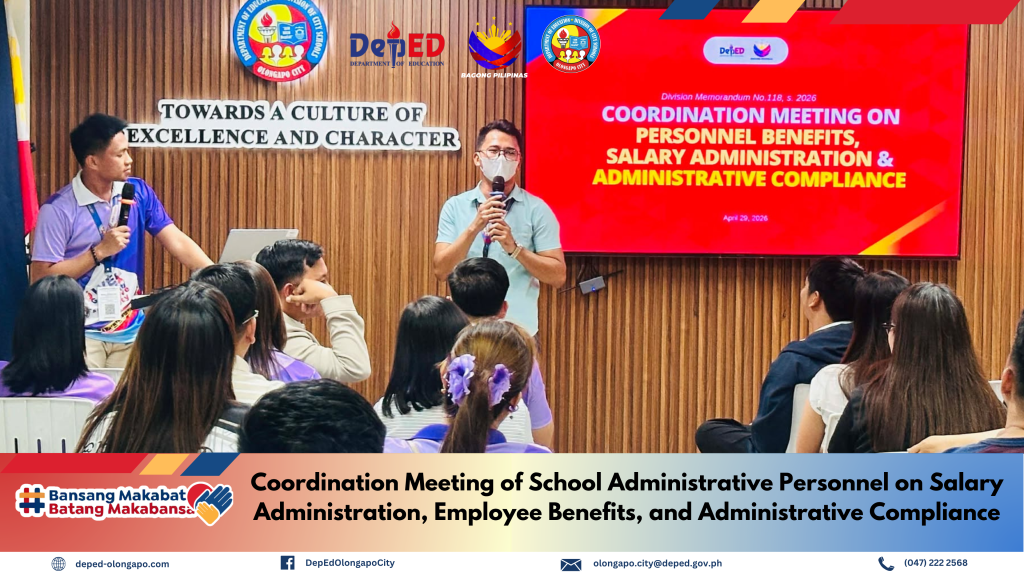
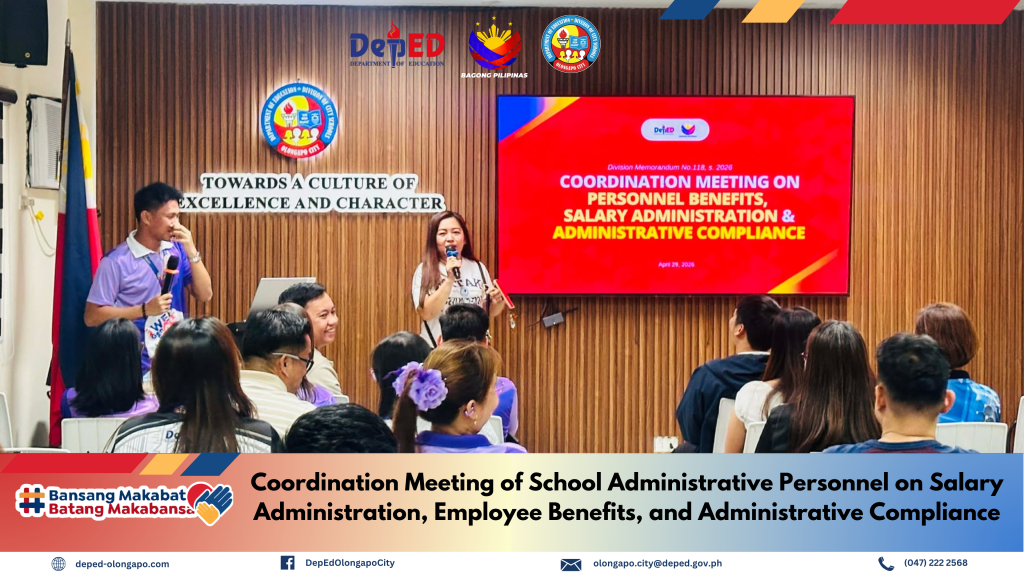
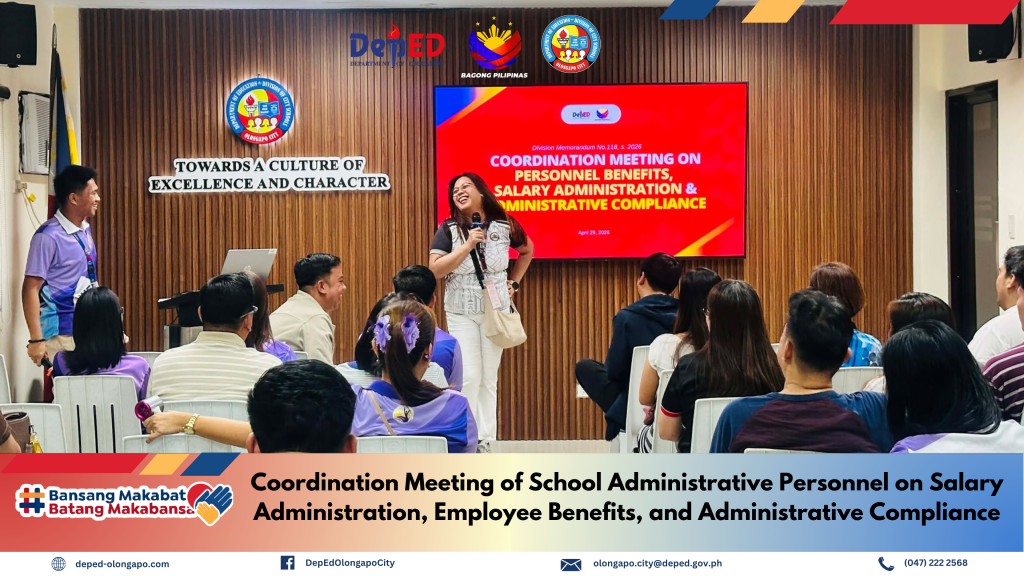
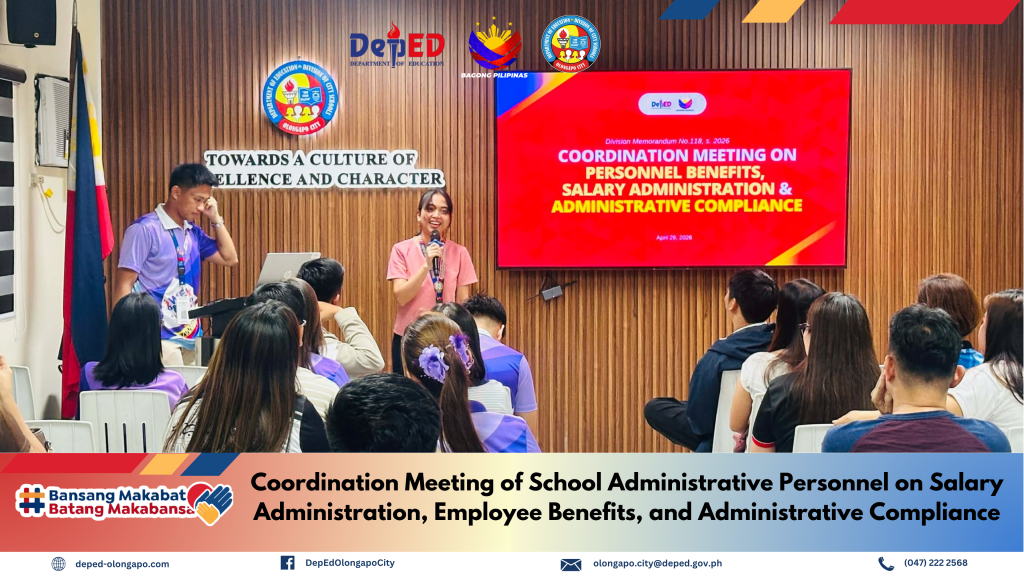
OLONGAPO CITY-April 29,2026. Strengthening efficiency, ensuring timely payroll delivery, and promoting accountability among personnel were at the forefront of the Department of Education (DepEd) Olongapo Division’s coordination meeting on personnel benefits, salary administration, and administrative compliance, with a strong emphasis on initiatives to fast-track the salary adjustment and payment of salary differentials of newly promoted teachers under the ECP (Expanded Career Progression Program) of the government.
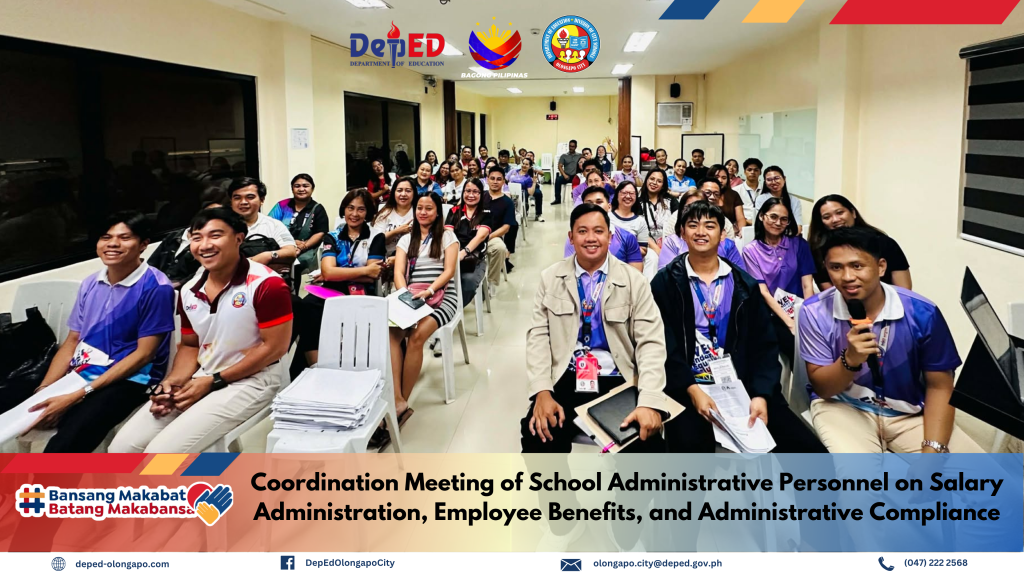
Anchored on the vision of a more responsive and transparent administrative system, the activity aimed to streamline payroll processes, reduce documentation errors, and reinforce compliance with established policies. The initiative specifically targeted teaching and non-teaching personnel, administrative staff, and implementing units to ensure that all stakeholders are aligned in addressing common payroll and benefits concerns.
A total of 44 participants attended the activity, composed of school administrative officers, administrative assistants, administrative aides, and support staff, reflecting strong inter-office collaboration and engagement.
The coordination meeting was initiated and directed by Juvimin Mustar, Administrative Officer V, who underscored the need for a unified and systems-driven approach in resolving payroll and administrative issues across offices.
The activity opened with remarks from Administrative Officer III Jeruel M. Pacatcatin, who emphasized that achieving efficient payroll systems requires collective responsibility and strict adherence to guidelines. He highlighted that accurate reporting, timely submission of documents, and proper coordination among offices are key to avoiding delays and ensuring that employees receive their rightful compensation on time, while also maintaining confidentiality and integrity in handling payroll documents.

Under Division Memorandum No. 118, s. 2026, the meeting gathered administrative personnel and education staff to align procedures and ensure timely and accurate processing of salaries and benefits, with a clear directive that all concerns be addressed through designated processors for prompt resolution.
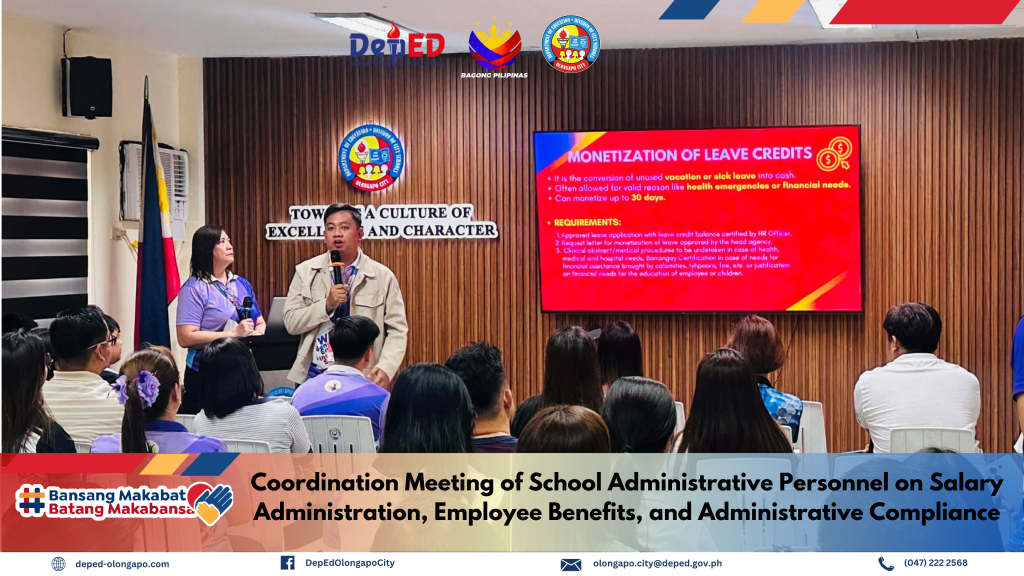
Key topics and issues were presented and discussed by resource speakers, integrating both technical guidance and recurring concerns encountered in the field: John Philip A. Pascual, Administrative Assistant II, covered DTR compliance, official time and flexitime declaration, mandatory attachments, and salary computation issues; Eduard Jude Tumali, Administrative Aide VI, discussed e-payslip access, availability, comparisons, and payroll process flow concerns; Rhodora J. Cuevas, Administrative Assistant III, tackled employee benefits such as maternity pay, loyalty pay, monetization of leave credits, and verification of loans; Dan Cedric Durago, Administrative Assistant II, addressed concerns on certificate of last salary, salary differentials due to promotion, and documentation discrepancies; while Jeruel M. Pacatcatin, Administrative Officer III, further presented issues on HRMS clearance requirements, E-Form 7 reporting errors, employee separation management, and the confidentiality of payroll records.
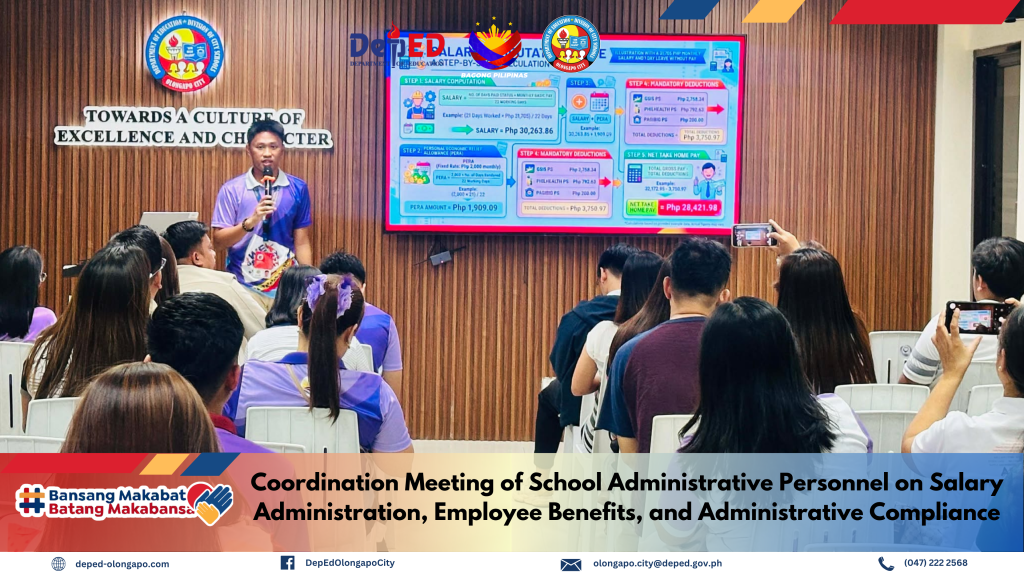

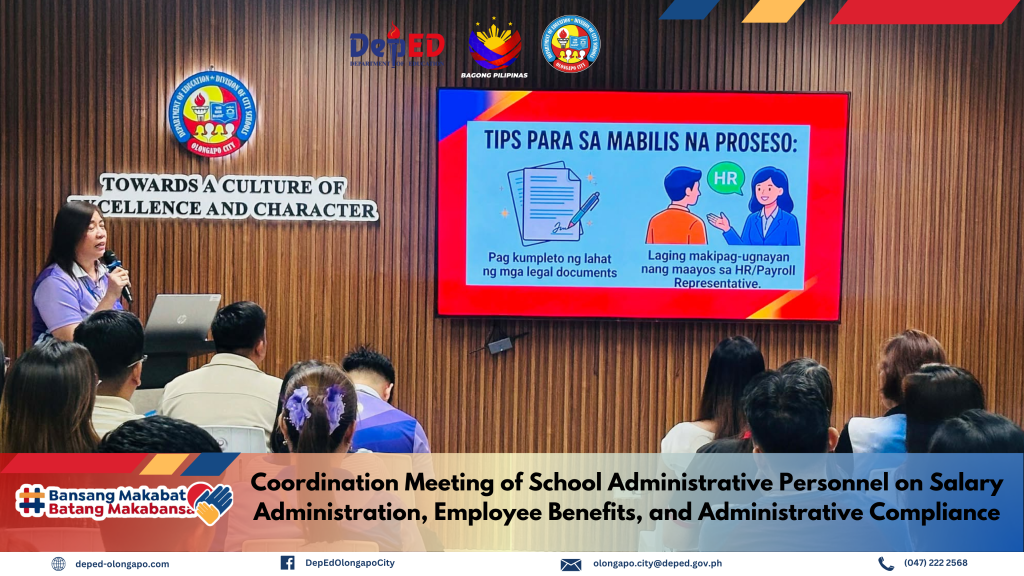


A key highlight of the discussion was the enforcement of payroll timelines. Employees are required to submit their Daily Time Records (DTRs) by the 2nd day of the month, with payroll processing scheduled from the 3rd to the 5th day. Late submissions will be processed in subsequent payroll cycles, potentially causing delays in salary release.

Participants were reminded to ensure completeness and accuracy in DTR entries, including proper signatures and clear declarations of official time, flexitime arrangements, and leave status, as inconsistencies remain one of the primary causes of payroll delays.
The meeting also outlined mandatory attachments for salary claims, such as leave forms, locator slips, travel authority, and accomplishment reports, particularly for personnel under flexible work arrangements, emphasizing that complete documentation is essential for efficient validation and processing.
Discussions further covered employee benefits, including maternity leave under the Expanded Maternity Leave Law, loyalty pay for long-serving employees, and monetization of leave credits, alongside clarifications on loan verification procedures through the DepEd Automatic Payroll Deduction System (APDS).

Another significant focus was the secure access and proper use of e-payslips, reminding employees that payslips are only available after salary crediting and must be accessed through official platforms with strict adherence to data privacy protocols.
Issues concerning certificate requests, salary differentials due to promotions, and discrepancies in employee records were also addressed, with officials cautioning that incomplete documents and premature requests could lead to delays in both payroll processing and issuance of certifications.
To further improve administrative efficiency, DepEd emphasized the importance of accurate reporting through systems such as the Records Management System (RMS) and E-Form 7, highlighting strengthened verification processes and timely submission of documents as critical measures.
The session concluded with a strong call for accountability, reinforcing that compliance is a shared responsibility and that non-compliance may lead to administrative actions, echoing the guiding principle emphasized throughout the meeting: prevention is better than correction.




The coordination meeting reflects DepEd Olongapo’s continued efforts to build a more efficient, transparent, and service-oriented administrative system ensuring that every employee is supported through the reliable and timely delivery of salaries and benefits.


